What Makes a Good Peel and Stick Wall Tile?
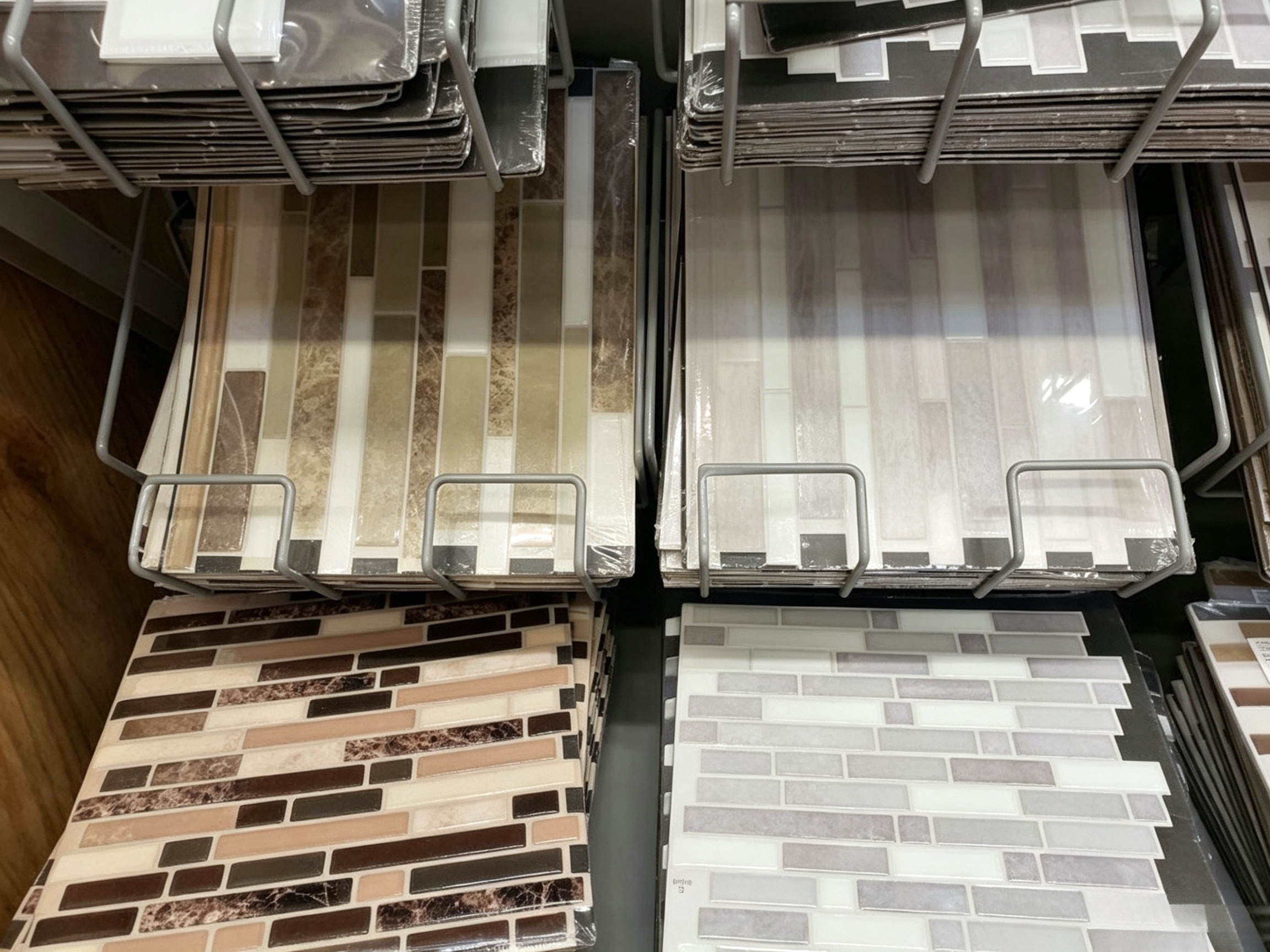
Wall tiles live a gentler life than floors, but they face their own enemies: gravity, humidity, and curious fingers. Here’s what we engineer for.
Adhesive quality
A good wall tile uses a permanent acrylic adhesive with a removable option for renters. The bond should be instant but repositionable for the first ten minutes.
Thickness & rigidity
Too thin and it shows every wall imperfection; too thick and corners lift. We target 1.2–2.0 mm with a rigid PVC core that stays flat.
Print fidelity
High-resolution digital print with a realistic relief (embossed marble veining, for example) is what sells the look. Low-res flat prints read as “sticker” from a meter away.
Edge finish
Beveled or tightly-butted edges hide seams. Square untrimmed edges leave visible lines that age poorly.
Frequently Asked Questions
What adhesive should a good peel and stick wall tile use?
A permanent acrylic adhesive, with a removable option for renters. The bond should be instant but repositionable for the first ten minutes.
How thick should peel and stick wall tiles be?
1.2–2.0 mm with a rigid PVC core that stays flat. Too thin and the tile shows every wall imperfection; too thick and the corners lift.
How can I tell a quality printed wall tile from a cheap one?
Look for high-resolution digital print with realistic relief, such as embossed marble veining. Low-resolution flat prints read as "sticker" from a meter away.
Why does edge finish matter on peel and stick wall tiles?
Beveled or tightly-butted edges hide seams, while square untrimmed edges leave visible lines that age poorly over time.
What should a wall tile spec sheet include?
The acrylic adhesive type, thickness in millimeters, print DPI, and edge treatment. If a supplier can’t state all four, keep looking.